
For most parents, the single biggest hesitation before choosing a boarding school is not academics, food, or facilities. It is safety. Handing over the daily care of a child to an institution, even a highly reputed one, means trusting that institution with something no brochure can fully capture: your child’s physical safety and wellbeing when you are not there to check on it yourself.
This is a fair and necessary concern, and it deserves a fair and specific answer, not vague reassurance. In this guide we break down exactly what “safe” should mean for a residential school in India today: the security systems that should be in place, the medical infrastructure that should be running every single day (not just during emergencies), the staffing and supervision ratios that matter, and the practical questions parents should ask on a campus visit before signing an admission form.
Why Boarding School Safety Deserves a Structured Answer, Not a Sales Pitch
Search any “best boarding school in India” list and you will find campuses described as “safe and secure” in a single throwaway line. That phrase means almost nothing on its own. Safety in a residential school is not one feature, it is a system made up of several independent layers: physical security, staff supervision, medical readiness, transport safety, food and water safety, and emotional/psychological safety. A school can be strong in one area and weak in another, so parents need to evaluate each layer separately rather than accept a generic assurance.
At GD Goenka International School, Sonepat, we believe this transparency is owed to every family considering residential education for their child. Below is a layer-by-layer breakdown of what a genuinely safe boarding school environment looks like, along with the standards we hold ourselves to on our own CBSE-affiliated campus in Kundli, Haryana (CBSE Affiliation No. 531123).
Layer 1: Physical Campus Security
Perimeter and Access Control
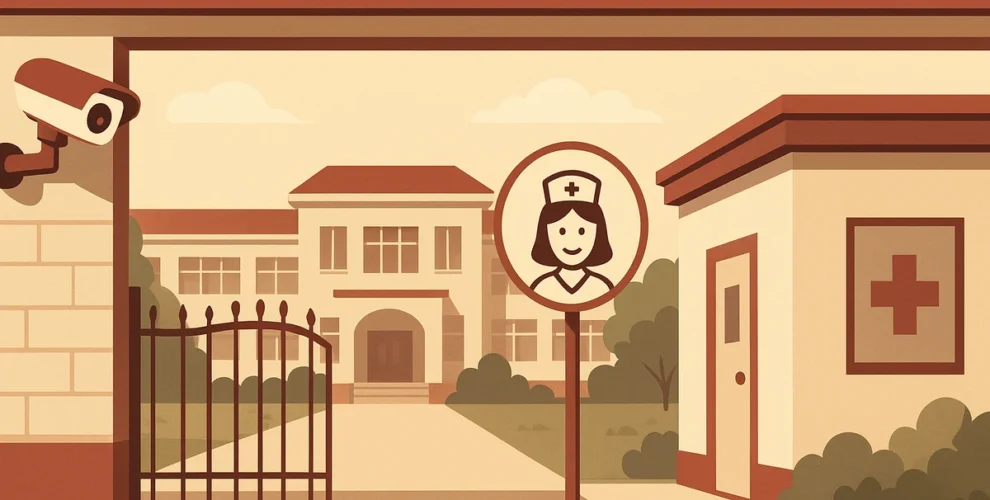
A residential campus is, functionally, a child’s home for the majority of the academic year. The first safety layer is controlling who can enter and exit the campus at all. This should include:
- A boundary wall or secure perimeter fencing around the entire campus, not just the academic block.
- A single, monitored main entry point for all vehicles and visitors, with a manned security desk.
- A visitor log book (physical or digital) recording every non-resident who enters, their purpose of visit, and their exit time.
- ID-based verification for all visitors, vendors, and delivery personnel before they are allowed past the reception area.
- Restricted access to hostel blocks: no visitor, including extended family, should be permitted into a boarding house without prior written authorization from a parent or guardian and sign-off from hostel staff.
CCTV Coverage
Camera coverage should extend well beyond the main gate. Look for CCTV monitoring at:
- Main entrance and all secondary gates
- Hostel block corridors and common areas (not private rooms, which should remain camera-free for dignity and privacy)
- Dining halls, libraries, sports facilities, and transport pick-up/drop points
- A central control room where footage is monitored in real time, with recordings retained for a defined period for review if an incident is reported
Trained Security Personnel
Cameras alone are not security. A safe campus is staffed round-the-clock by trained security personnel, ideally with a documented protocol for what to do in the event of an unauthorized entry, a medical emergency, or a fire alarm. Ask specifically how many security staff are on duty during night hours, since this is when supervision gaps are most likely to occur.
Layer 2: Hostel Supervision and Staff Ratios
Security systems protect a campus from external threats. Hostel supervision protects children in their day-to-day residential life, which is arguably the more important safety layer for a boarding school specifically.
Key questions to ask:
- What is the warden-to-student ratio in each hostel block? A lower ratio means more individual attention and faster response to a child in distress, whether that is a physical injury, a bout of homesickness, or a conflict with a roommate.
- Are wardens resident on the same floor as students, or in a separate building? Same-floor residency allows for faster response at night.
- Is there a female warden presence in girls’ hostels and a male warden presence in boys’ hostels, with clear reporting lines for any concern a student wishes to raise?
- What is the protocol if a student is unwell at night? This should be a documented, rehearsed procedure, not an improvised response.
- How are new students (especially those in Class 6-8, away from home for the first time) settled in during their first weeks? A structured induction and buddy-system reduces both physical and emotional risk in the critical early adjustment period.
At GD Goenka Sonepat, hostel supervision is structured around resident wardens on every floor, a defined student-teacher ratio of approximately 1:15 at the primary level, and a clear escalation protocol from warden to hostel in-charge to school administration for any safety concern, day or night.
Layer 3: Medical Infrastructure, The Layer Parents Underestimate Most
If security systems answer “who can get in,” medical infrastructure answers “what happens when something goes wrong.” This is the layer most frequently underrepresented on school websites, yet it is arguably the most important one for a boarding parent, because a day-school parent can reach their child within minutes of a health issue; a boarding parent may be hours away.
A genuinely safe boarding school should be able to answer all of the following clearly, not vaguely:
On-Campus Medical Facility
- Is there a dedicated infirmary or medical room on campus, separate from the classroom and hostel blocks, equipped with beds for students who need to rest or be observed?
- Is the infirmary staffed by a qualified nurse present on campus during school hours, and ideally with a nurse or trained staff member available on the residential side after hours as well?
- Is there a visiting doctor or a retained physician who does periodic rounds and is on call for the school?
- What first-aid and emergency medical supplies are stocked on-site, and are hostel wardens trained in basic first aid and CPR?
Emergency Response and Hospital Tie-Ups
- Does the school have a formal tie-up or referral arrangement with a nearby multi-specialty hospital for emergencies beyond what the on-campus infirmary can handle?
- What is the average response time from the on-campus infirmary identifying a need for hospital care to the student actually being transported?
- Is there a dedicated ambulance or vehicle on standby, or reliance on calling one externally (which adds critical response time)?
- Is there a written protocol for parent notification in a medical emergency, and how quickly are parents informed?
Health Records and Preventive Care
- Does the school maintain a health record for every boarding student, including known allergies, medical conditions, and medication schedules?
- Are dietary requirements (allergies, medical diets) communicated from the infirmary to the hostel mess/dining team, not just filed away on paper?
- Are periodic health check-ups conducted for boarding students, and is there a system for routine vaccinations or health screenings in coordination with parents?
At GD Goenka Sonepat, medical care is treated as a daily-operations function, not an emergency-only service. Our on-campus medical care facility is staffed to attend to students through the school day and residential hours, with defined referral protocols to hospital facilities in the Sonepat-Delhi NCR region for anything beyond first-line care. Parents are informed promptly of any medical event involving their child, in line with our institutional commitment to transparent communication.
Layer 4: Transport Safety
For day-boarding students and those travelling home on weekends or breaks, transport is a distinct safety layer worth its own scrutiny:
- GPS-tracked buses that allow the school (and in many cases, parents) to monitor real-time location
- A trained attendant on board every bus, in addition to the driver, for younger students
- Verified, background-checked drivers with valid commercial licenses
- A defined pick-up/drop protocol requiring ID verification of the receiving parent or guardian, especially for younger children
Layer 5: Food and Water Safety
Boarding students eat every meal on campus, which makes food safety a continuous, not occasional, safety consideration:
- Kitchen and mess areas that undergo regular hygiene audits
- RO/UV-purified drinking water tested periodically
- A nutritionally reviewed, age-appropriate menu with clear processes for handling food allergies and medical diets
- Visible hygiene practices in food storage, preparation, and serving areas that parents can observe directly on a campus visit
Layer 6: Emotional and Psychological Safety
Physical safety protects the body; emotional safety protects a child’s mental wellbeing, which matters just as much in a residential setting away from home.
- Is there a school counsellor or wellness coordinator available to boarding students, not only to day scholars?
- Is there a clear, child-friendly process for a student to report bullying, ragging, or any form of mistreatment, with a guarantee of confidentiality and no retaliation?
- How does the school support homesickness, particularly for younger boarders or those in their first term away from home?
- Are house parents and wardens trained to recognize signs of emotional distress, not just physical illness?
A genuinely child-first boarding environment treats emotional wellbeing as seriously as physical safety, because the two are deeply connected. A child who does not feel emotionally safe is also less likely to report a physical safety concern.
Layer 7: Staff Screening and Accountability
The people who interact with your child every day, teachers, hostel wardens, mess staff, drivers, and support staff, are as important a safety layer as any camera or fence. Before enrolling, parents should ask about the school’s staff screening and accountability processes:
- Are background verification checks conducted on all staff who have direct, unsupervised access to students, including support and contract staff, not only teaching faculty?
- Is there a documented Child Protection Policy that all staff are trained on and required to acknowledge, covering acceptable conduct, reporting obligations, and consequences for violations?
- Is there an internal committee or designated safety officer responsible for receiving and acting on any safety concern raised by a student, parent, or staff member?
- How often is staff conduct reviewed, and is there a clear escalation path if a parent has a concern about a specific staff member’s behavior?
Accountability structures matter because they determine what happens after a concern is raised, not just whether an incident is prevented in the first place. A school with a named, trained safety committee and a documented policy is signaling that safety is treated as an ongoing institutional responsibility, not a one-time compliance checkbox.
Red Flags vs Green Flags: What to Look For on a Campus Visit
It helps to know, in plain terms, what a strong safety culture looks like in practice compared to a weak one. Use this quick comparison during your visit.
Green flags (signs of a genuinely safe environment):
- Staff can answer specific safety questions with real numbers, named processes, and without hesitation.
- The infirmary is a real, staffed, physically present facility you are shown during the visit, not a room pointed at from a distance.
- Visitor logging happens in front of you, unprompted, as a normal part of how the campus operates.
- Wardens and teachers know students by name and can describe how they check on boarders daily.
- The school is transparent about its hospital tie-up, including the name of the hospital and approximate distance from campus.
Red flags (signs to probe further or reconsider):
- Vague answers to direct safety questions, or staff who defer every question to “the administration will explain later.”
- No visible on-campus medical facility, or a facility that appears to exist only on paper.
- Reluctance to let you see hostel blocks, common areas, or meet wardens directly during a visit.
- No clear answer on emergency hospital tie-ups, ambulance access, or parent notification timelines.
- No mention of a Child Protection Policy, counsellor, or a defined process for a student to report a concern confidentially.
A single red flag is not necessarily disqualifying, since even strong schools can have one area to improve. But a pattern of vague answers across multiple layers, security, medical, staffing, and accountability, is a meaningful signal that safety may not be as structurally embedded as the school’s marketing suggests.
Why This Matters More in the Post-Pandemic, Post-HCU Era of Parent Research
Parents researching boarding schools today are far more thorough than a decade ago. Health awareness increased sharply after the pandemic years, and most parents now specifically search for a school’s medical readiness, not just its academic ranking. At the same time, search engines increasingly reward pages that answer real, specific parent questions in detail rather than pages that make generic claims. This guide is written with both audiences in mind: parents who want a genuinely useful, specific answer, and a standard of transparency we believe every residential school should be held to, including our own.
If a school’s website only mentions safety in a single adjective, “secure campus,” it is worth asking why the specifics are not spelled out. The absence of detail is itself useful information for a parent doing due diligence.
A Practical Checklist for Your Campus Visit
When you visit a boarding school (and you always should, before enrolling), take this checklist with you and ask to see, not just be told about, each of the following:
1. Walk through the main entrance and ask to see the visitor log process in action.
2. Ask to visit the on-campus infirmary/medical room in person and meet the nursing staff if available.
3. Ask directly: “What is your hospital tie-up, and how far is it from campus?”
4. Ask for the warden-to-student ratio in the specific hostel block your child would be placed in.
5. Ask how a medical emergency at 2 a.m. would be handled, step by step.
6. Ask how the school communicates with parents in a non-emergency but noteworthy health event (a fever, a minor injury).
7. Ask about counselling support availability for boarding students specifically.
8. Observe the CCTV coverage in hostel corridors and common areas during your walkthrough.
A school that can answer each of these questions specifically, with real numbers and named processes, is demonstrating an institutional safety culture. A school that responds only with general reassurance is asking you to take safety on faith, and for something as important as your child’s residential wellbeing, that should not be necessary.
How GD Goenka Sonepat Approaches Safety
GD Goenka International School, Sonepat is a CBSE-affiliated residential school (Affiliation No. 531123) set on a secured campus in Kundli, Haryana, within the Delhi NCR region. Our approach to student safety is built around the same layered structure outlined in this guide: controlled campus access with CCTV monitoring, resident hostel wardens maintained at a student-teacher ratio of approximately 1:15 at the primary level, an on-campus medical care facility for day-to-day health needs, and defined referral protocols for anything requiring specialist or emergency hospital care.
We encourage every prospective parent to visit the campus, meet our hostel and medical staff directly, and ask the exact questions listed above. Safety should never be a marketing claim you take on trust. It should be something you can see, verify, and ask detailed questions about before you decide.
To learn more about our boarding program and facilities, read our guide on choosing the best boarding school in NCR, compare day boarding vs full boarding options, or explore when is the right age to send your child to boarding school. You can also see how we compare with other top boarding schools in India on facilities and infrastructure, or visit our Admissions page to schedule a campus visit.
Frequently Asked Questions
1. What security measures should a safe boarding school have in place?
A safe boarding school should have a secured perimeter, a single monitored entry point with visitor logging, CCTV coverage across common areas and hostel corridors, trained security personnel on duty around the clock, and restricted access to hostel blocks for anyone without prior written parental authorization.
2. Does GD Goenka Sonepat have an on-campus medical facility?
Yes. GD Goenka International School, Sonepat maintains an on-campus medical care facility to attend to students during school hours and residential hours, with referral protocols in place for cases that require hospital-level care in the Sonepat-Delhi NCR region.
3. How do boarding schools handle medical emergencies at night?
A well-run boarding school has a documented emergency protocol involving the hostel warden, on-campus medical staff, and a tie-up with a nearby hospital, along with immediate parent notification. Parents should ask specifically about response time and transport arrangements during their campus visit.
4. What is a good warden-to-student ratio in a boarding school hostel?
While there is no single universal number, a lower ratio generally means faster response and more individual attention. At GD Goenka Sonepat, the student-teacher ratio is approximately 1:15 at the primary level, supported by resident wardens on each hostel floor.
5. How can parents verify a boarding school’s safety claims?
The most reliable way is an in-person campus visit where parents can observe CCTV coverage, meet hostel and medical staff directly, review the visitor management process, and ask detailed questions about emergency protocols rather than relying on website descriptions alone.
6. Is emotional and psychological safety part of boarding school safety?
Yes. A complete safety framework includes access to a school counsellor, a confidential process for reporting bullying or mistreatment, and staff trained to support homesickness and emotional adjustment, particularly for younger boarders in their first term away from home.
Written by: GD Goenka International School, Sonepat, Editorial Team
This article is intended as general guidance for parents evaluating boarding school safety standards in India and does not constitute a guarantee of specific outcomes. Parents are encouraged to verify current facilities and protocols directly with any school under consideration, including GD Goenka International School, Sonepat, during a campus visit.
Sources and Further Reading
- CBSE Affiliation Bye-Laws and school infrastructure norms: cbseaff.nic.in
- CBSE SARAS affiliation verification (GD Goenka Sonepat, Affiliation No. 531123): saras.cbse.gov.in
- Ministry of Education, Government of India, school safety and child protection guidelines: education.gov.in
- National Commission for Protection of Child Rights (NCPCR), on child safety in institutional settings: ncpcr.gov.in
- Indian Academy of Pediatrics, guidance on school health and first-aid readiness: iapindia.org